
Malaysia MRT Putrajaya Line
Client

Malaysia MRT
Sector
Railway
Year
2016
Location
.svg.png)
Malaysia
The Malaysia MRT Putrajaya Line (MRT Line 2) in Kuala Lumpur Value Management / Value Engineering (VM/VE) Studies in the Concept and Early Design Stages
Summary
Impressive results in cost reduction and increased ridership were delivered from the VM studies for route alignment using collaborative principles of engagement with large and diverse group of stakeholders, including expert peer reviewers. Building a collaborative team not only ensured alignment to the objectives and the common understanding of the options for consideration but also got universal buy-in to the agreed outcomes.
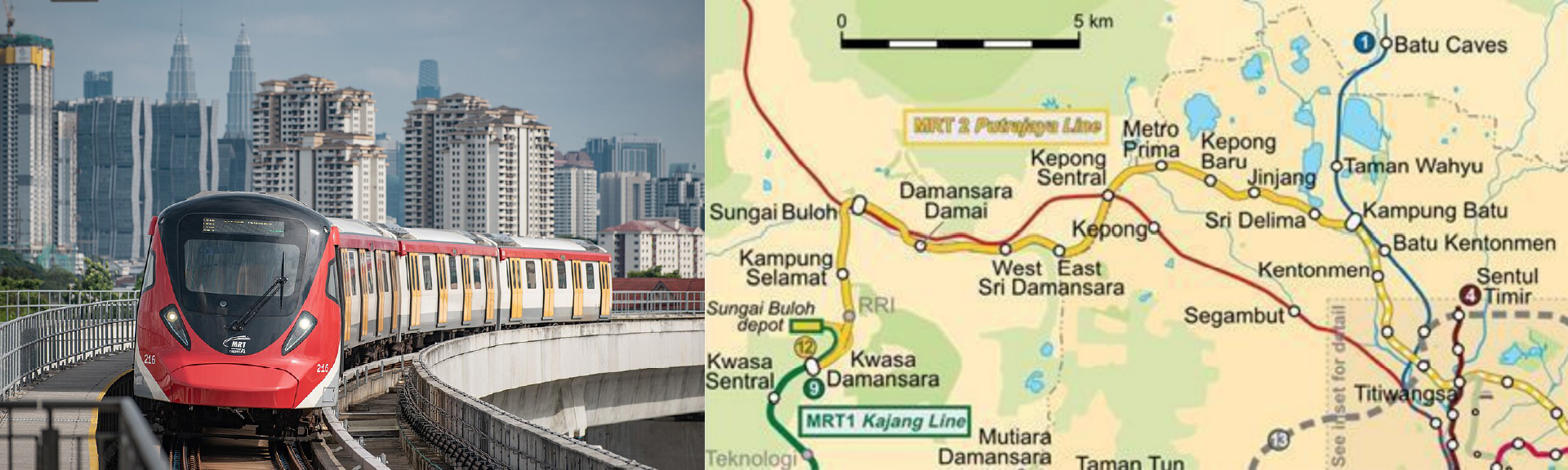
The Putrajaya Line (MRT Line 2) in Kuala Lumpur is a major driverless rail system connecting Kwasa Damansara to Putrajaya, serving millions with both elevated and underground sections, offering seamless integration with other lines like the Kajang Line, and providing crucial links to areas like the city centre and airport aiming to reduce traffic and enhance mobility in the Klang Valley.
Value Management Programme
The study was spread over an 18-month period comprising 9 workshops following the SAVE process, to balance cost, performance, and stakeholder needs to determine the best alignment option and elicit creative value adding ideas. The programme was aligned to design Gateways, with workshops of 1 or 2 days each of between 1 and 2 days, with a final report to the Finance Bureau. Topics covered were as follows:
- Alignment for above ground sections
- Alignment for underground sections
- Elevated guideways
- Elevated stations and interchanges
- Noise attenuation
- Railway systems – power, signalling, ticketing etc.
- U/G stations and interchanges
- Depot
- Risk management for tunnelling
Alignment Stage Workshops - 1 week each
- Include all key stakeholders: MRT, expert peer reviewers, engineering consultants, management contractors, government departments and public representatives
- Presentation briefing and 2-day familiarisation trip of alignment corridor with a focus on available options
- Commence workshop by agreeing the mindsets and behaviours needed for a successful outcome
- Establish common agreement on functional needs and judgement criteria
- Use focus groups to assess advantages / disadvantages of the options available
- Present back and evaluate as a whole group to assure buy-in
The key criteria for the assessment included but not limited to the following:
- Ridership
- Social Environment – Short and Long Term
- Programme and Risk
- Overall Cost
Value Assessment (Alignment Optimisation & Station Typology)
- Cost Savings: RM 2.9 billion
- Social impact: 70% reduction of affected buildings
- Ridership increased by 5.6%
Key Learnings for Value Management Studies on Major Projects
- A client who understands VM and wants to get the best outcomes
- Inclusion of all stakeholders
- Inclusion of expert peer reviewers
- Fully inform participants of the facts and the process to be followed (site visits, practical examples of potential outcomes)
- Focus on building relationships with the stakeholder team and agree collaborative behaviours needed for a successful outcome
- Expert facilitation:
- Ensure that all opinions are heard and evaluated to an agreed process
- Align the team to an agreed outcome
SOLUTIONS