

Solutions
Design Thinking
Design Thinking
Design Thinking is a human-centered approach to solving problems and creating solutions. It's all about understanding the needs of people, brainstorming creative ideas, testing them, and refining based on feedback.
Unlike traditional problem-solving, which often focuses on technical or business constraints, Design Thinking prioritizes empathy and innovation.
The Model:
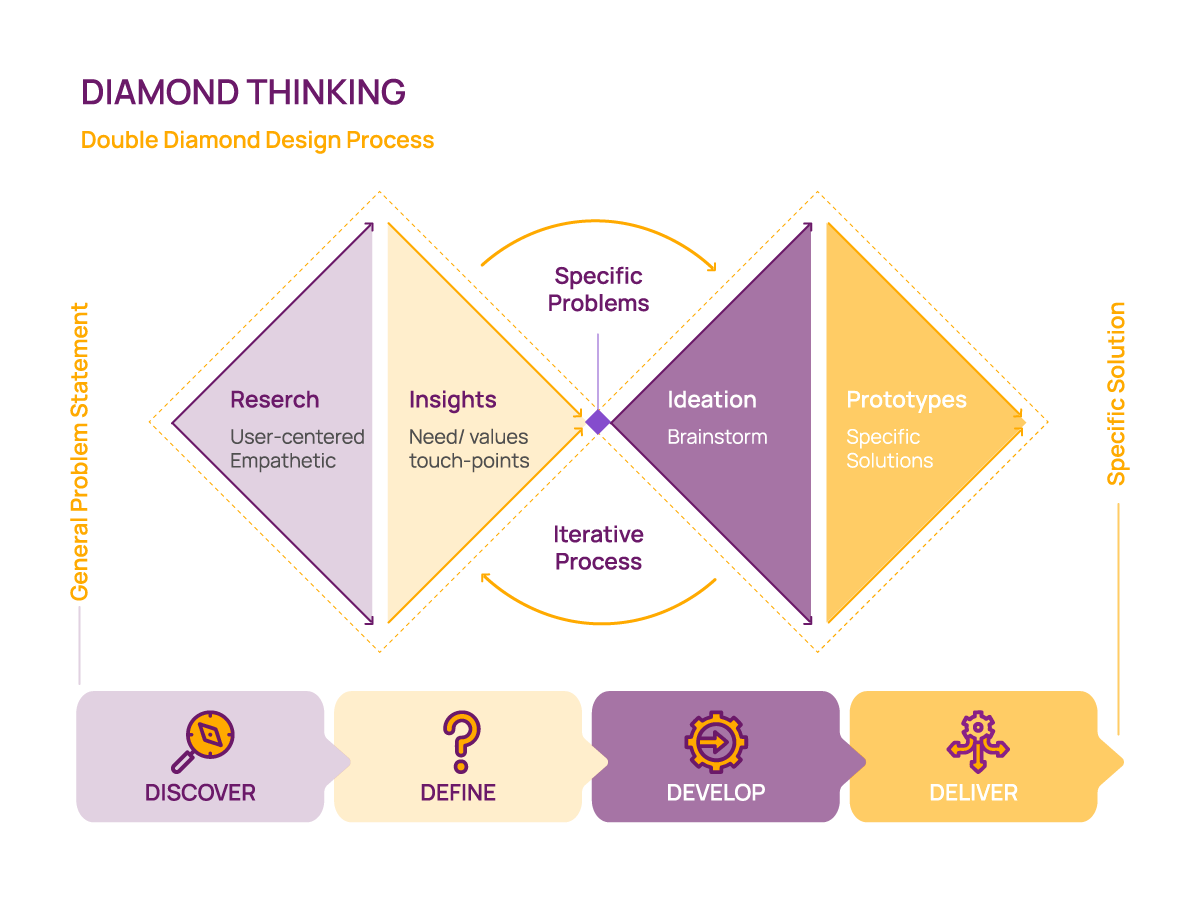
Here’s a simplified breakdown of its steps:
1. Discover: Get to know the people you're designing for — what their needs, challenges, and desires are? This is about exploring and empathizing with the people affected by the problem.
2. Define: Based on what you’ve learned, clearly state the problem you’re aiming to solve.
3. Develop: Brainstorm as many ideas as possible, no matter how unconventional.
4. Deliver: Create simple, tangible versions of your ideas: prototyping e.g. mock-ups, sketches, or models. Try out your prototypes with real users, gather feedback, and refine.
Applications: Design Thinking is used in various fields, such as:
• Business: To create customer-centric products, services, and experiences.
• Education: To design more engaging and effective learning methods.
• Healthcare: To improve patient care and healthcare delivery systems.
• Social Impact: To develop solutions for community challenges like sustainability or accessibility.